מאמרים מאת יוסי שביט
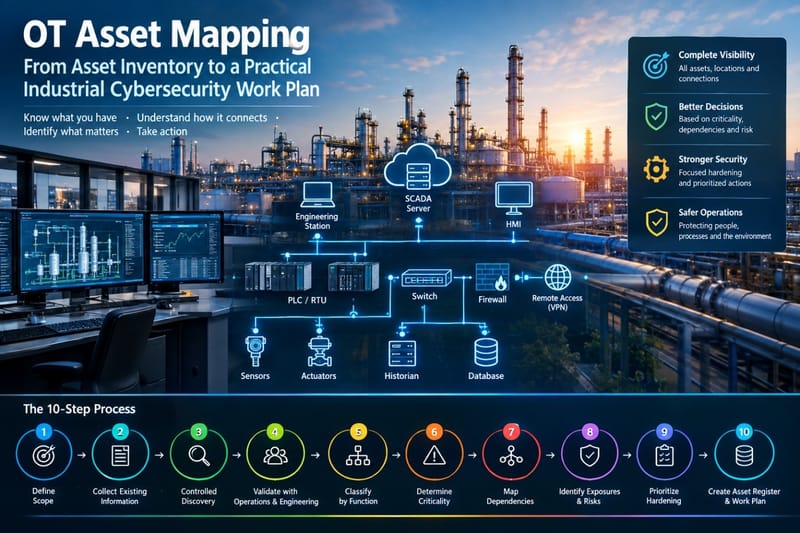
OT Asset Mapping – From Asset Inventory to a Practical Industrial Cybersecurity Work Plan
One of the fundamental prerequisites for protecting industrial control systems is the ability to answer a seemingly simple question: What is actually connected to the industrial network? In many industrial facilities, there is no complete and up-to-date picture of all assets. Alongside SCADA servers and engineering stations, there are PLCs, HMIs, sensors, actuators, switches, communication converters, Safety systems, supplier laptops, communication equipment, and sometimes legacy components that are no longer properly documented. In the IT world, it is often possible to perform active network scans and automatically identify assets. In OT environments, however, a more cautious approach is required. Uncontrolled scanning can potentially affect a controller, network device, or even a physical industrial process. Therefore, OT asset mapping must be an engineering, operational, and cybersecurity process, not merely a technical activity. The goal is not simply to create a list of assets, but to establish a basis for decision-making: which assets are more critical, which are more exposed, what dependencies exist between assets, and what should be hardened first
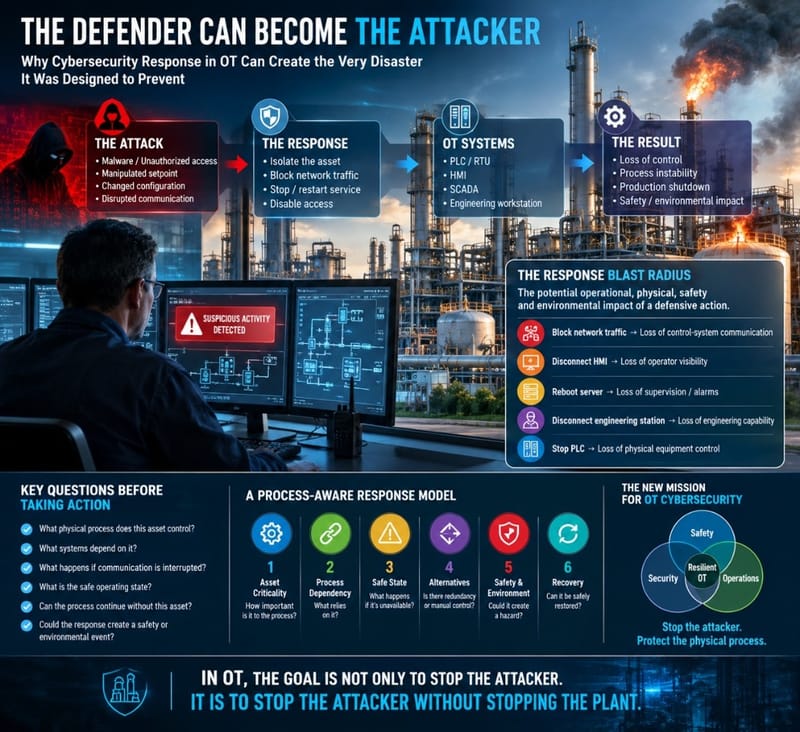
THE DEFENDER CAN BECOME THE ATTACKER
Cybersecurity incident response in traditional IT environments is generally built around a clear objective: detect the threat, contain it, eradicate it, and restore normal operations. Actions such as disconnecting a compromised computer, blocking malicious communication, disabling an account, or shutting down a suspicious process are often considered standard defensive measures. In Operational Technology (OT) environments, however, the situation is fundamentally different. An OT network does not exist only to process information. It controls and monitors physical processes. Behind every PLC, SCADA server, HMI, engineering workstation, sensor and communication link there may be pumps, motors, valves, heaters, compressors, chemical processes and other physical equipment. As a result, a cybersecurity response that is technically correct from an IT perspective may create an unexpected and potentially dangerous consequence in the physical environment. This leads to a critical principle: In OT, stopping the cyber threat must not create a greater operational or safety threat. The challenge is therefore not simply to stop the attacker, but to stop the attacker without destabilizing the process being protected. Yosi
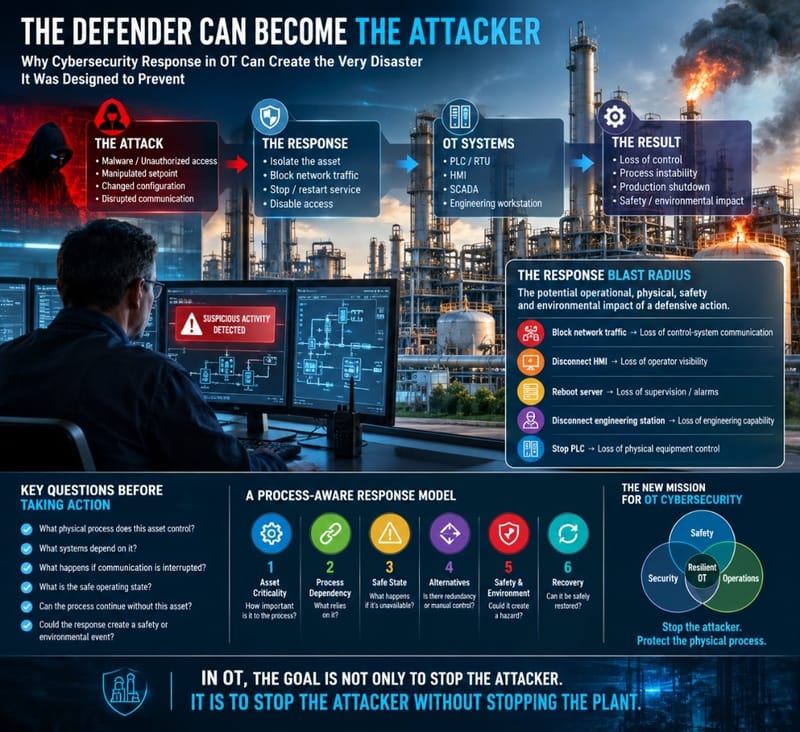
רשתות OT - המגן עלול להפוך לתוקף
תגובה לאירועי אבטחת סייבר בסביבות IT מסורתיות בנויה בדרך כלל סביב מטרה ברורה: לזהות את האיום, לבלום אותו, למגר אותו ולשקם את הפעילות הרגילה. פעולות כגון ניתוק מחשב פרוץ, חסימת תקשורת זדונית, השבתת חשבון או סגירת תהליך חשוד נחשבות לעיתים קרובות לאמצעי הגנה סטנדרטיים. בסביבות טכנולוגיה תפעולית (OT), לעומת זאת, המצב שונה באופן מהותי. רשת OT אינה קיימת רק כדי לעבד מידע. היא שולטת ומנטרת תהליכים פיזיים. מאחורי כל בקר PLC, שרת SCADA, תחנת HMI, תחנת עבודה הנדסית, חיישן וקישור תקשורת עשויים להיות משאבות, תנורי חימום, מדחסים, תהליכים כימיים וציוד פיזי אחר. כתוצאה מכך, תגובת אבטחת סייבר שהיא נכונה מבחינה טכנית מנקודת מבט של IT עלולה ליצור תוצאה בלתי צפויה ומסוכנת בסביבה הפיזית. זהו עיקרון קריטי: ב-OT, אסור שפעולת הסייבר תיצור איום תפעולי או בטיחותי גדול יותר. לכן, האתגר אינו רק לעצור את התוקף, אלא לעצור אותו מבלי לשבש את היציבות של התהליך המוגן.